

Adaptogen and Nootropic Packaging Services in North America.
Integrated primary and secondary packaging for mood, focus, and adaptogen brands — botanical powders, tinctures, capsules, and functional blends.
Book a Discovery Call →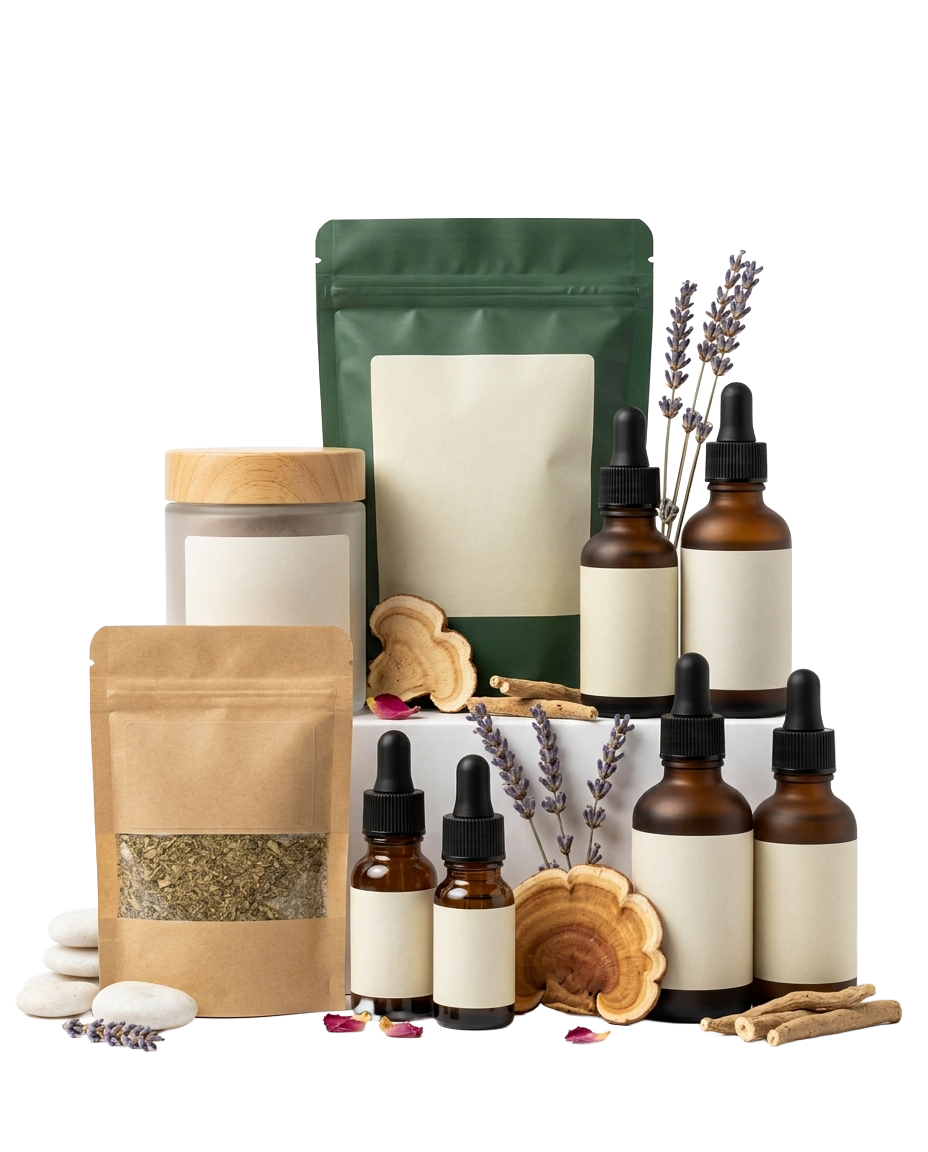
Adaptogen brands are bought on trust, and the packaging carries most of it.
Ashwagandha, reishi, lion's mane, L-theanine, rhodiola. The mood, focus, and adaptogen category has grown from a health-food-store niche into one of the fastest-expanding corners of North American wellness, with nootropics alone projected to grow at double-digit rates through the next decade. The brands winning it look nothing like traditional supplements. They read as apothecary: uncoated stock, amber and violet glass, ingredient provenance on the front panel, restraint everywhere.
That aesthetic is also a functional requirement. Botanical actives degrade under light and oxygen, so the amber jar is not a styling decision, it is a shelf-life decision. And the apothecary look depends on uncoated and recycled substrates that behave very differently on press than the coated stock most packaging suppliers default to. Getting both right at once is where this category is genuinely harder than it looks.
Barrier where it matters, restraint where it shows.
Adaptogen and nootropic brands run powders, tinctures, capsules, and single-serve formats across the same line. Each one needs a different barrier strategy and the same visual discipline. We source the components and produce the secondary packaging against a single specification.
- Amber and violet glass jars for botanical powders and blends
- Dropper bottles for tinctures and liquid extracts
- HDPE and glass capsule bottles with induction seals
- Barrier pouches and stand-up bags for powder blends
- Single-serve stick packs for functional lattes and mixes
- Wide-mouth canisters with scoop retention and headspace control
- Decoration: silk-screen, pressure-sensitive, uncoated label stock
- Folding cartons with Supplement Facts and provenance panel layout
- Uncoated and recycled paperboard for apothecary positioning
- FSC and SFI-certified stock with documented traceability
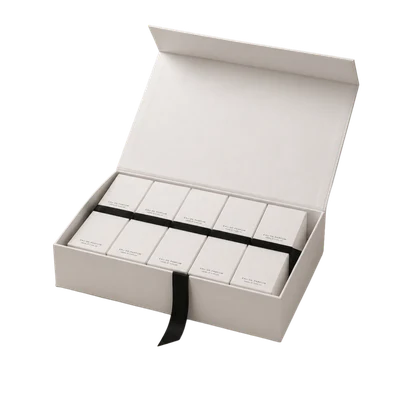
- Rigid boxes for ritual sets and multi-blend kits
- Tamper-evident seals and induction liners
- Protective shippers engineered for glass jars in DTC transit
- Retailer master cases and shelf-ready trays
"Botanical actives degrade in light and air. In this category the packaging decision is a formulation decision."
Who we build adaptogen and nootropic packaging for.
Our clients in this category tend to be founder-led, ingredient-obsessed, and selling into a customer who reads the label carefully. The packaging has to survive that scrutiny on materials, sourcing claims, and finish.
The adaptogen packaging problems most suppliers do not price for.
The Packaging Playbook, mapped to an adaptogen launch.
Every project moves through six stages. For adaptogens and nootropics, the stage-specific watchpoints are light and oxygen barrier, substrate behaviour on uncoated stock, claim panel architecture, and glass protection in transit.
 Discovery Formats, actives, stability and barrier needs
 Design Barrier strategy, substrate, panel architecture
 Source Vetted supplement and glass component network
 Quality Seal integrity, press proofing, ISTA validation
 Production Coordinated runs across jar, pouch, and carton
 Delivery Filler, 3PL, or subscription fulfilment
Why we're building for adaptogens and nootropics.
Mood, focus, and adaptogen supplements are among the fastest-growing segments in North American wellness, with nootropics forecast to grow at double-digit annual rates over the next decade. The brand cohort leading it overlaps almost exactly with the wellness and beauty clients we already serve: indie, founder-led, selling into natural and prestige retail. What is missing is a packaging partner who treats barrier performance and apothecary finish as the same conversation.
Knockout applies the integrated model we run for supplements and beauty to this category. Amber and violet glass, barrier pouches, capsule bottles, and stick packs sourced against your stability requirements, with uncoated and recycled cartons, labels, and shippers produced alongside them. One specification, one QC process, one accountable partner.
Adaptogen & Nootropic packaging questions we get asked
Do you supply amber and violet glass for light-sensitive botanicals?
Yes. Amber and violet glass jars and bottles are standard in this category because many botanical actives degrade under UV exposure. We specify glass type, closure, and liner against your formula and stability data, and can pair glass with opaque secondary packaging where the exposure risk is higher.
Can you package powders, tinctures, capsules, and stick packs for one brand?
Yes, and most of our clients in this category run at least three of those formats. We source the jars, dropper bottles, capsule bottles, pouches, and stick packs and produce the cartons, labels, and shippers around them on one timeline.
What's the minimum order quantity for adaptogen packaging?
Depends on the component. Stock glass jars and bottles with custom labels and cartons typically start around 5,000 to 10,000 units. Custom folding cartons start at 2,500 to 5,000. Barrier pouches and stick packs vary with film specification. Discovery sets realistic minimums before design begins.
Can you print on uncoated and high-recycled paperboard?
Yes, and we proof on the actual stock rather than a coated substitute. Uncoated and recycled boards absorb ink differently and shift colour, so we set targets and tolerances early and review physical press sheets before the run.
How do you protect powder blends from oxidation and moisture?
Through barrier film selection, induction seals, oxygen absorbers or nitrogen flush where warranted, and controlled headspace. The right combination depends on the formula and shelf-life target, which is a Discovery conversation rather than a catalogue selection.
Do you support Supplement Facts and structure and function claim layout?
Yes. We coordinate panel architecture, disclaimer placement, and claim hierarchy with your regulatory reviewer so the required disclosures fit legibly without compressing the brand design.
How fast can you turn an adaptogen packaging project?
A refresh on existing component architecture with new labels and cartons runs 6 to 10 weeks. A full launch with stock primary and custom secondary typically runs 10 to 14 weeks. Custom-tooled glass runs 16 to 20 weeks. Discovery sets the realistic timeline.
Launching a blend, moving to glass, or rebuilding a line that keeps failing on shelf life?
Tell us what you're building. We'll tell you what's realistic on timeline, on MOQ, on barrier, on substrate. Discovery is free and it's where the real scope gets set.
Book a Discovery Call →