

Sleep and Recovery Packaging Services in North America.
Integrated primary and secondary packaging for sleep, recovery, and restorative wellness brands — gummies, tinctures, magnesium powders, and topical formats.
Book a Discovery Call →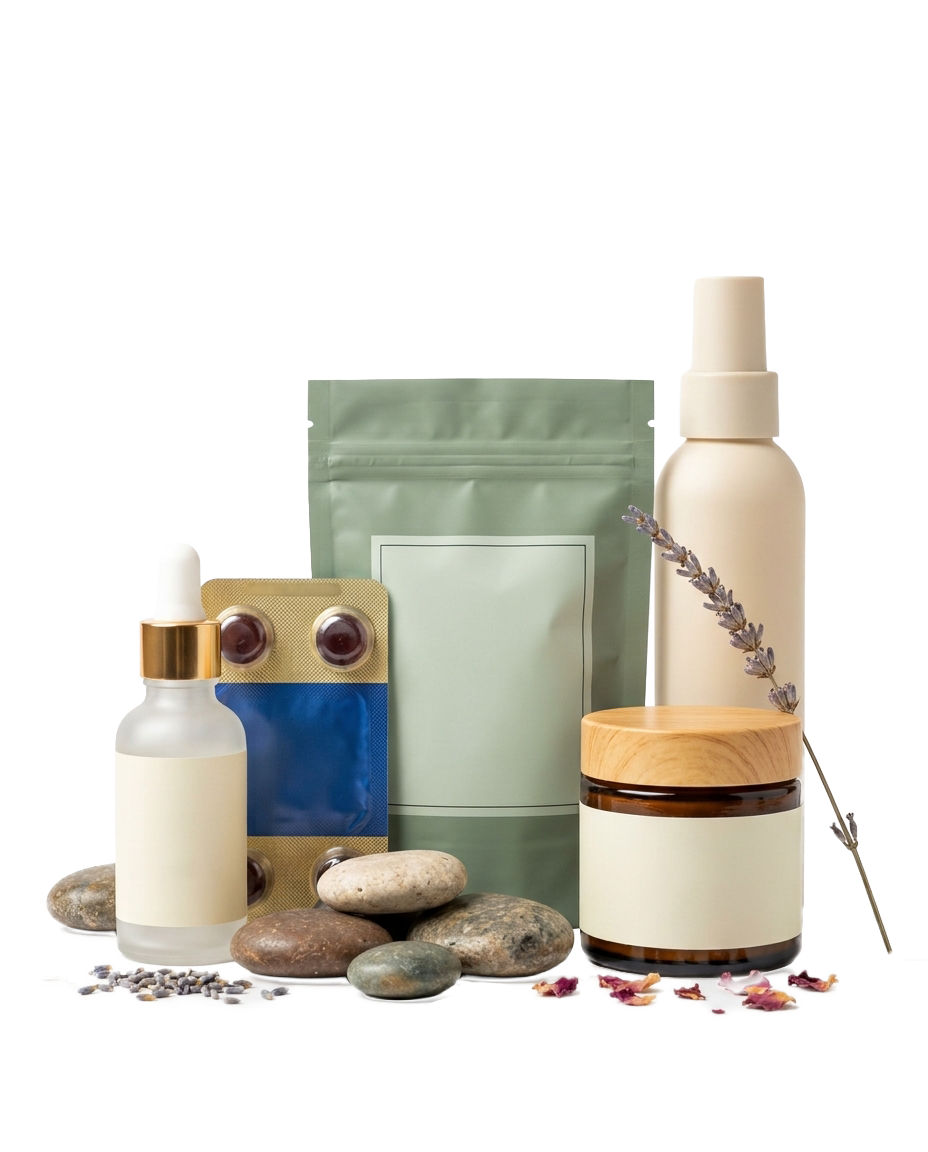
Sleep is the fastest-moving shelf in wellness, and the packaging has to feel like the promise.
Melatonin gummies, magnesium powders, botanical tinctures, sleep patches, topical recovery balms. Sleep went from a single-SKU category to a full evening ritual in about four years, and the brands leading it launched multi-format from day one. A sleep brand today is usually running a gummy jar, a dropper bottle, a stick pack, and a topical tube at the same time — four component supply chains, four decoration files, four QC standards.
The category also carries real regulatory weight. Melatonin gummies drew CPSC and paediatric-safety scrutiny, which pushed child-resistant closures from optional to expected on anything a household with kids might buy. Meanwhile the brand promise is calm, so the packaging cannot rattle, leak, clump, or read like a pharmacy bottle. Most component suppliers handle one format well. Knockout handles the portfolio.
Every format a sleep portfolio needs, specified as one system.
Sleep and recovery spans ingestibles, powders, and topicals in the same brand line. Each format has its own primary architecture, its own barrier requirement, and its own panel layout. We source and produce them against one specification so the shelf set actually looks like a set.
- PET and HDPE jars for gummies, with child-resistant closures
- Amber glass dropper bottles for melatonin and botanical tinctures
- Wide-mouth canisters for magnesium and drink powders
- Single-serve stick packs and sachets for powdered blends
- Airless pumps and tubes for topical magnesium and recovery balms
- Roll-ons and fine-mist sprayers for pillow mists and topical blends
- Induction seals, desiccant systems, and tamper-evident closures
- Folding cartons built around Supplement Facts panel architecture
- PCW paperboard (30% to 100% post-consumer) and FSC-certified stock
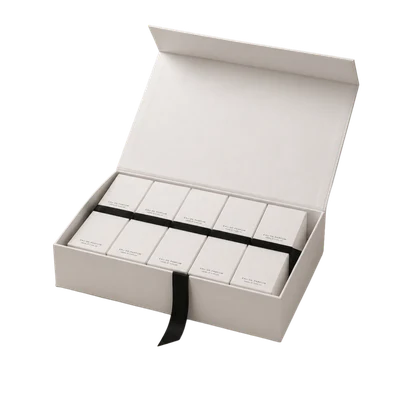
- Rigid boxes for evening ritual kits and gifting sets
- Pressure-sensitive labels, shrink sleeves, and neck tags
- Child-resistant carton structures where the closure alone is not enough
- Subscription-ready mailers and protective shippers
- Retailer master cases and shelf-ready display trays
"Sleep brands sell a feeling. If the jar rattles, the powder clumps, or the dropper leaks in transit, the feeling is gone before the first dose."
Who we build sleep and recovery packaging for.
Our sleep clients are usually multi-format from the start and moving fast. What they share is a portfolio that spans ingestible and topical formats under one brand identity, and a launch calendar that does not allow for three staggered supplier timelines.
The sleep and recovery packaging problems that cost brands a launch.
The Packaging Playbook, mapped to a sleep and recovery launch.
Every project moves through six stages. For sleep and recovery, the stage-specific watchpoints are child-resistant closure specification, barrier and shelf-life protection, panel architecture across small formats, and multi-format continuity.

Why we're building for sleep and recovery.
Sleep and recovery is the fastest-moving wave in North American wellness. Melatonin, magnesium, and botanical sleep formats are growing at double-digit rates, and the brands leading the category are indie, DTC-first, and multi-format from launch. The component supply base has not kept up. Most suppliers handle either the gummy jar or the tincture bottle, and almost none handle the carton system that ties the portfolio together.
Knockout applies the same integrated model we run for supplements and beauty to sleep and recovery. Gummy jars, dropper bottles, stick packs, and topical tubes sourced against one specification, with the cartons, labels, and shippers produced alongside them. One QC process, one timeline, one accountable partner across every format in the portfolio.
Sleep & Recovery packaging questions we get asked
Do you supply child-resistant packaging for melatonin gummies?
Yes. We specify child-resistant closures for gummy jars and supplement bottles, sample-test the open force so the closure is usable for the intended adult buyer, and document the specification for retailer and legal review. We set this at Design rather than discovering it after a retailer flags it.
Can you package gummies, tinctures, powders, and topicals for the same brand?
That is the core of what we do. We source the jars, dropper bottles, canisters, stick packs, and tubes across the portfolio and produce the cartons, labels, and shippers alongside them, so every format ships on one timeline against one finish specification.
What's the minimum order quantity for sleep supplement packaging?
Depends on the component. Stock jars and bottles with custom labels and cartons typically start around 5,000 to 10,000 units. Custom folding cartons start at 2,500 to 5,000. Custom-tooled primary components start higher, usually 25,000 or more. Discovery sets realistic minimums before design begins.
How do you protect gummies and powder blends from moisture?
Through the closure system and the fill specification together. Induction seals, desiccant canisters or sachets, barrier films for pouches and stick packs, and controlled headspace. We specify these against your formula rather than defaulting to a standard liner.
Do you support Supplement Facts panel and claim layout requirements?
Yes. We coordinate panel architecture, structure and function claim placement, and carton dieline together so the required disclosures fit without compressing the brand design. Your regulatory team owns the claims; we make sure the packaging can carry them.
Can you produce single-serve stick packs and sachets?
Yes. Stick packs and sachets are a growing share of sleep and recovery work, particularly for magnesium and functional blends. We handle the barrier film specification, the printed carton or pouch that holds them, and the shipper.
How fast can you turn a sleep and recovery packaging project?
A refresh on existing component architecture with new labels and cartons runs 6 to 10 weeks. A full launch with stock primary and custom secondary typically runs 10 to 14 weeks. Fully custom-tooled primary components run 16 to 20 weeks. Discovery sets the realistic timeline against your launch window.
Launching a sleep line, adding a recovery format, or replacing a supplier mid-portfolio?
Tell us what you're building. We'll tell you what's realistic on timeline, on MOQ, on components, on compliance. Discovery is free and it's where the real scope gets set.
Book a Discovery Call →